
Choosing a lawn dethatcher for your property
Start with the problem you want to solve. Thatch is a layer of organic material between the green grass and the soil. A lawn dethatcher works through that layer to loosen excess material for removal. It is a renovation tool, rather than a replacement for regular mowing, and a tired-looking lawn does not automatically need dethatching.
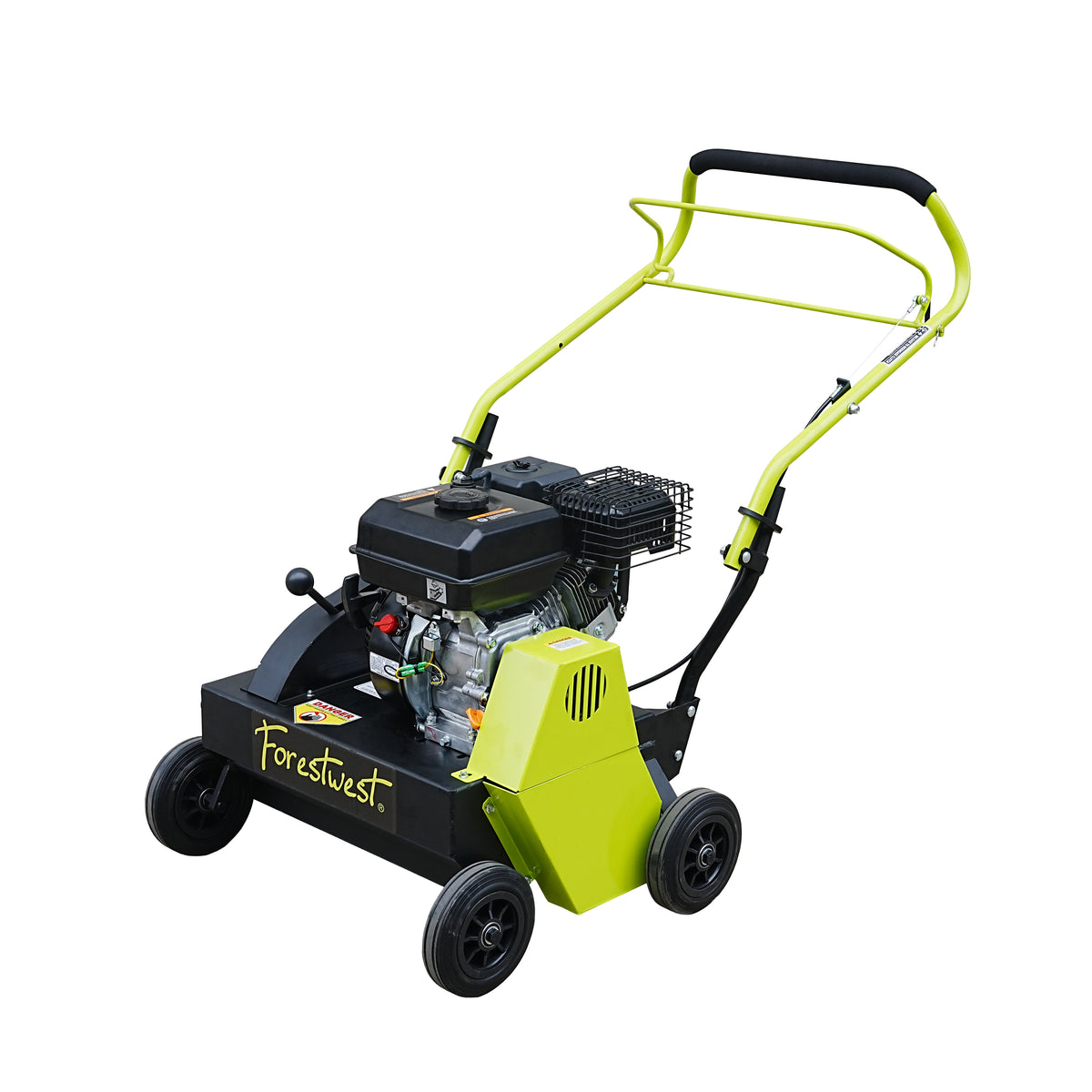
BM11167 petrol power rake
The Forestwest BM11167 7HP lawn dethatcher and power rake has a 20-inch (508mm) flail reel, self-propelled drive and adjustable working depth. Check the product page for full specifications and current availability.
- Lawn condition: inspect the thatch layer before deciding how much material needs removing.
- Grass variety: choose a renovation method that preserves the growth your lawn needs to recover.
- Site access: check overall machine dimensions against gates and paths. Reel width is not overall machine width.
- Handling and clean-up: plan transport and allow time to collect the loosened material after treatment.
If you are unsure whether the machine suits your lawn or access, contact Forestwest for model advice before ordering.
Dethatcher, turf cutter or rotary hoe?
These machines perform different jobs. Choose according to whether you want to retain the existing lawn, remove it or prepare exposed soil.
- Keep the lawn and remove excess thatch: a lawn dethatcher or power rake is the relevant machine to assess.
- Remove old turf in strips: consider the BM11166 petrol turf cutter or browse the turf cutter collection.
- Cultivate exposed soil: the BM11123 rotary hoe and tiller is intended for soil preparation. It is not a tool for dethatching a lawn you want to preserve.
For a fuller comparison, read turf cutter vs dethatcher vs rotary hoe: which machine do you need?
Lawn dethatcher FAQs
Is a power rake the same as a lawn scarifier?
The names overlap in lawn-care equipment listings, but the reel and cutting action matter more than the label. Machines sold as scarifiers, dethatchers or power rakes can use different blade or tine arrangements. The BM11167 uses a flail reel; check the actual configuration rather than assuming that every machine has interchangeable scarifying and raking attachments.
Can I dethatch buffalo, couch or kikuyu grass?
The treatment must suit the grass. Buffalo relies heavily on above-ground runners, so aggressive removal can damage its ability to recover. Seek advice from your turf supplier before using a powered machine on buffalo. Where treatment is appropriate, test a small area with the least aggressive suitable setting and check that attached runners remain. Couch and kikuyu also need a suitable recovery period; one setting should not be assumed suitable for every lawn.
When should I dethatch a lawn in Australia?
Choose a period when your grass is actively growing and has time to recover. For warm-season lawns, this commonly means a suitable spring or early-summer window, depending on local climate and grass variety. Follow local turf advice instead of choosing one calendar month for every Australian region.
How deep should a lawn dethatcher be set?
Use the machine manual and the lawn's condition to determine the setting. Start with a small trial area and assess the material removed before continuing. A machine's maximum adjustment is not a recommended depth for every lawn, and removing more material is not automatically better.
Does dethatching replace lawn aeration?
No. Dethatching targets the organic layer; aeration works into the soil. The BM11132 36-inch tow-behind spike aerator makes spike holes and requires suitable towing equipment. It does not remove soil plugs like a hollow-tine corer, and should not be chosen as if the two treatments were identical.
What should I do after dethatching?
Collect the loosened material and assess the remaining lawn. Base watering, fertiliser and any further renovation on your grass variety, local conditions and turf supplier's advice. Allow the lawn to recover before deciding whether another treatment is needed.
Will a dethatcher remove the whole lawn?
That is not its intended job. If you are replacing the grass completely, follow our guide to removing old lawn before laying new turf and choose equipment for turf removal rather than increasing dethatching depth.