
Choosing a turf cutter for lawn removal
A turf cutter cuts horizontally beneath established grass so the turf can be lifted in strips. It is useful when replacing an old lawn, changing turf variety or clearing grass for garden beds and landscaping. If you want to keep the lawn and only remove built-up thatch, choose a dethatcher instead.
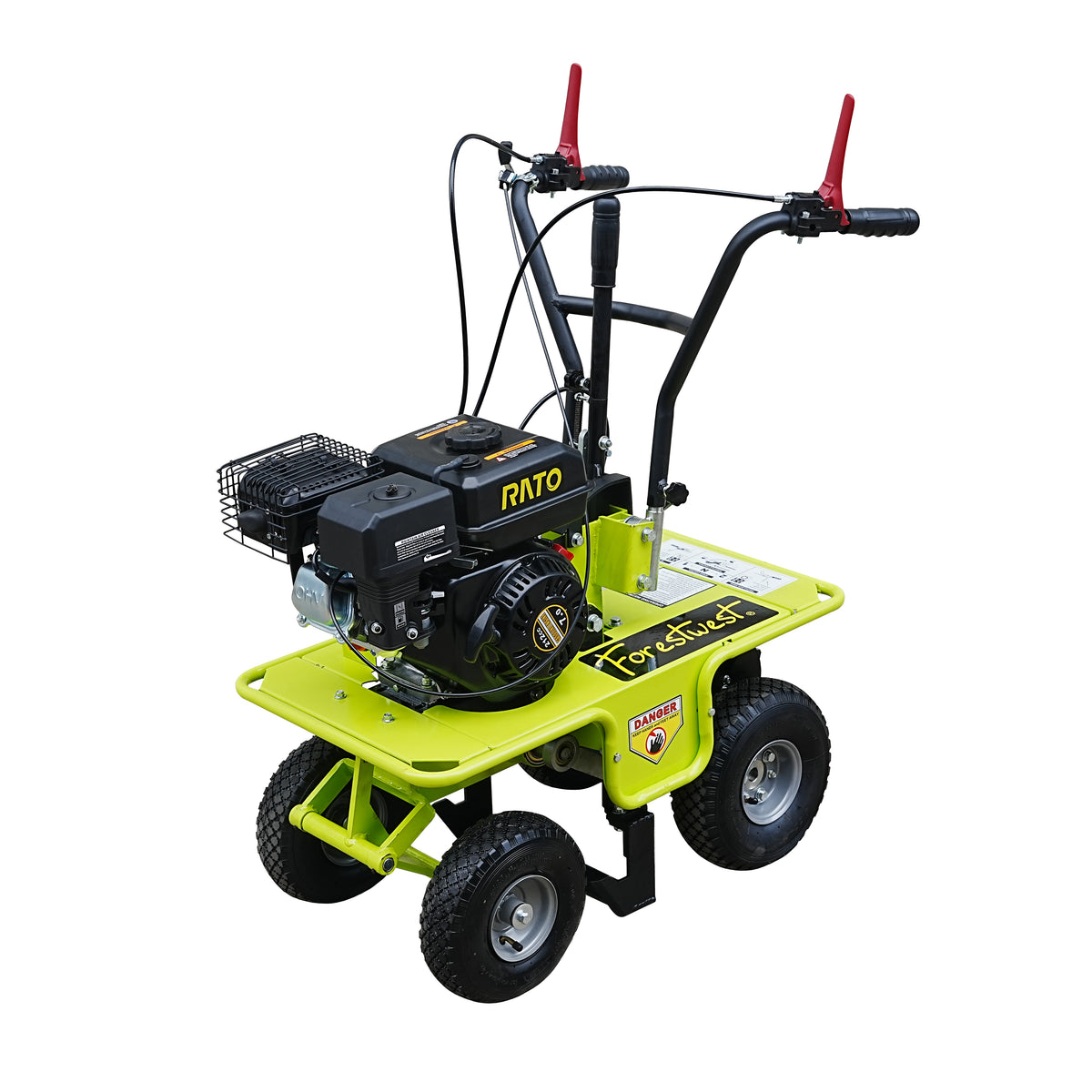
BM11166: self-propelled petrol turf cutter
The Forestwest BM11166 7HP turf and sod cutter is the model currently available in this collection. Its powered drive reduces manual pushing, while two forward speeds let you match progress to the ground conditions. You still need to guide the machine and lift or roll the cut turf separately.
- 305mm cutting width: approximately 12 inches, for cutting the lawn into strips.
- Adjustable depth up to 35mm: start with a test strip and cut only as deep as needed to separate the turf.
- 7HP four-stroke petrol engine: for outdoor turf-removal work.
- Two forward speeds: select a suitable speed for the soil and follow the operating manual.
Before ordering, check the machine's overall operating width against gates and paths; cutting width is not overall machine width. Plan loading, transport and handling, and ask Forestwest about site access or model suitability if you need help.
Removing old grass before laying new turf
- Assess the lawn. Decide whether it needs complete replacement or whether renovation could retain the existing grass.
- Prepare the site. Identify irrigation, cables, pipes and other obstacles, remove loose debris and mow the grass short.
- Check ground conditions. Avoid waterlogged ground. Very dry, hard soil can also make cutting difficult.
- Test, then cut. Inspect a short test strip before continuing. Cut manageable lengths and lift or roll the separated turf for removal.
- Prepare the exposed base. Remove remaining runners and debris, assess drainage and soil condition, then correct levels before laying new turf.
See our step-by-step guide to removing old lawn before laying new turf for the full preparation sequence. Always use the machine according to its manual.
Turf cutter, dethatcher or rotary hoe?
Choose equipment for the layer you need to work on. These machines solve different problems; a lawn renovation does not automatically require all three.
- Remove the existing lawn: use a turf cutter to separate the turf layer for lifting and disposal.
- Keep the lawn but remove thatch: the BM11167 lawn dethatcher and power rake works through accumulated thatch at the lawn surface.
- Loosen exposed soil after turf removal: the BM11123 dual rotating rear tine tiller / rotary hoe is an option when the soil genuinely needs cultivation. Suitable soil may only need levelling.
Read our turf cutter vs dethatcher vs rotary hoe comparison to match the machine to your lawn-renovation plan.
Other equipment for specific renovation tasks
For larger established lawns where aeration is appropriate, compare the BM11132 36-inch tow-behind spike aerator and BM11133 60-inch tow-behind spike aerator. These require a suitable towing vehicle and make openings with spikes; they do not remove soil cores or cut away turf.
If you need to screen loose soil during preparation, explore the BM690 electric rotary soil sieve. For larger-area seed or fertiliser application, the BM11170 self-propelled seed and fertiliser spreader is another option to assess against your site and application requirements. Neither is a necessary purchase for every lawn replacement.
Turf cutter FAQs
Is a turf cutter the same as a sod cutter?
Yes. In this context, turf cutter and sod cutter describe a machine that cuts beneath the grass and root layer so it can be removed in sections. It does a different job from a mower, which cuts the grass above the ground.
How deep should I cut the turf?
Use the depth needed to separate the turf on your site, rather than automatically selecting the deepest setting. The BM11166 has a maximum cutting depth of 35mm. A deeper cut makes sections heavier and removes more topsoil, so inspect a test strip before continuing.
What should I check before removing buffalo, kikuyu or couch grass?
Check the thickness of the turf, root and runner growth, soil moisture and hidden obstacles. Grass variety alone does not establish whether a particular site will cut cleanly. Runners or roots remaining after removal can regrow, so inspect the exposed soil and address remaining vegetation before installing replacement turf.
Does the machine roll up or collect the turf?
The cutter separates the turf from the soil. You then cut it into manageable lengths and lift or roll it separately. Plan handling and disposal before starting, because turf with attached soil can be heavy.
Should I use a rotary hoe before or after a turf cutter?
For a clean lawn replacement, remove the old turf first. Inspect the soil afterwards and cultivate only if it needs loosening or mixing. Rotary hoeing through the existing lawn can mix grass runners and roots into the soil.
Should I buy a turf cutter or hire one?
For a one-off job, compare local hire costs, transport and the time available. Buying may suit repeated landscaping or property-maintenance work, but allow for storage, servicing and turf handling. This collection lists machines for sale; check the product page for current price and availability.
How do I arrange delivery, collection or support?
Review Forestwest's shipping information and Click & Collect options before ordering. Confirm stock and collection arrangements for your location. For an existing machine, use the after-sales support form and provide the model number.