
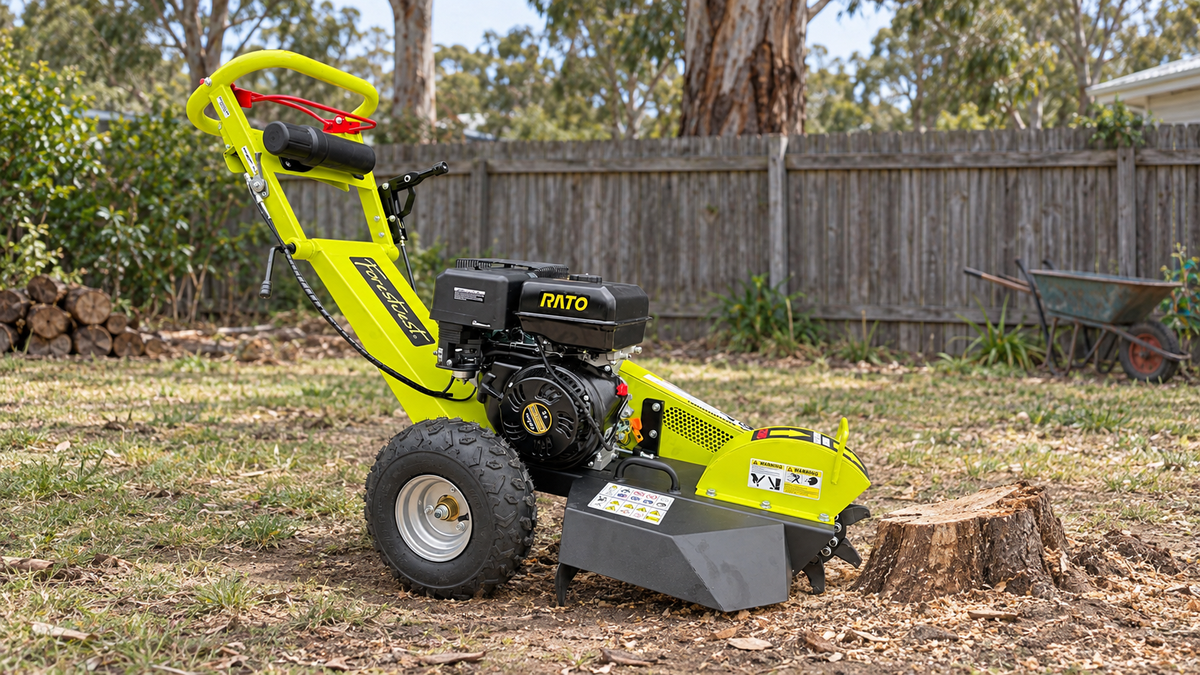
Successful stump grinding starts before the engine is running. Checking the site, understanding the controls and planning how to remove the stump in stages are all part of the job.
This guide explains the general workflow. Use the operator’s manual supplied with your specific machine for its starting sequence, cutter engagement, braking, permitted slopes and stopping procedure. If you are unfamiliar with the controls, obtain instruction before operating.
1. Decide what the finished area needs
Measure the stump and identify the intended result. Are you removing an obstruction from a lawn, preparing a garden bed or making space for another project?
This helps establish the required working area and target depth. Do not automatically grind to the machine’s maximum depth.
Assess access and transport as well. You need enough room to position and operate the machine, not simply enough space to get it through a gate.
2. Check for underground services
Before grinding below ground level, obtain relevant service information through Before You Dig Australia and follow the asset owners’ instructions.
Plans are part of the checking process; they are not permission to start cutting. Arrange appropriate service location where required and account for private installations such as irrigation, garden lighting and pipes.
If a service may be affected, stop planning the cut until its location and the permitted work method are established.
3. Prepare the work area
Inspect around the stump for stones, wire, metal and other foreign objects. Clear loose obstructions where this can be done safely before work starts.
Consider where chips and debris could travel. Keep people and pets outside the exclusion area specified for your machine, and assess nearby windows, vehicles and public access.
Use the protective equipment required by the manual and the site conditions, including eye and hearing protection and suitable footwear. Petrol machinery must be operated outdoors, away from enclosed spaces where exhaust can accumulate.
4. Inspect the machine before starting
With the engine stopped, check the machine according to its pre-operation checklist. This should include the condition of the cutting teeth, guards, fasteners and controls, together with the required fluid checks.

Do not operate with damaged teeth, missing guards, leaks or controls that do not function correctly. Follow the prescribed isolation procedure before inspection or servicing that could expose you to moving parts.
For reference, Forestwest offers the BM11075 15HP petrol stump grinder and the BM11169 27HP self-propelled model. Their controls and movement systems should not be assumed to operate identically.
5. Position the machine and follow its starting procedure
Set up on suitable ground within the machine’s operating limits. Apply the braking and positioning procedure described in the manual, and establish a stable operator position.
Identify how to stop the engine and cutter before starting. Follow the specified sequence for starting and engaging the cutting system.
Powered travel on a self-propelled machine assists movement. It does not replace operator control or authorise travel on any slope or surface.

6. Remove the stump in controlled passes
Stump grinding is a gradual process. Follow the machine’s prescribed cutting pattern, removing manageable amounts of wood rather than forcing the cutter deeply into the stump.
Work progressively and maintain a clear view of the cutting area. Listen for changes in engine behaviour and watch for unusual vibration.
If the machine repeatedly stalls, cuts poorly or behaves unexpectedly, stop and investigate using the manual’s troubleshooting guidance. Do not compensate by forcing the machine or continuing with suspected tooth damage.
There is no single cutting depth per pass suitable for every machine and timber condition. Use the instructions for your model rather than borrowing settings from another grinder.
7. Stop before clearing or checking
Never reach into the cutting area or remove trapped material while the cutter is moving.
Before clearing chips, inspecting teeth or adjusting the machine, stop the engine, wait for all movement to cease and follow the specified isolation procedure. Refuel only with the engine stopped and sufficiently cool, away from ignition sources.
These stopping and inspection principles are also reflected in manufacturers’ stump grinder operating guidance; the control sequence must still come from your own machine’s manual.
8. Clean up and restore the area
After grinding, remove excess chips and inspect the resulting depression. The remaining roots and buried wood may still affect later planting or construction.
Use suitable backfill for the intended finish and allow for settlement. Do not leave an unmarked hole where someone could step into it.
Clean and inspect the machine as directed, record any worn or damaged parts and prepare it for storage.
Plan the machine around the work
A useful equipment choice considers the complete job: access, transport, positioning, grinding and maintenance.
Review the Forestwest petrol stump grinder range alongside your site measurements and expected workload. Where services, difficult access or ground conditions make the work uncertain, obtain professional advice before proceeding.