
Cement Mixer VS Mortar Mixer: How to Choose the Right Mixer for Your Project?
If you are in the middle of planning a construction project, you might look at a mixer and think, "It's just a spinning drum, right? It will mix anything." I get it. On the surface, a Cement Mixer and a Mortar Mixer look like they could be cousins. But after spending decades on job sites, I can tell you that using the wrong one is like trying to eat soup with a fork—you might eventually get there, but it will be messy, slow, and you will regret it.
Understanding the distinction between these two machines is critical for the quality of your work, the longevity of your equipment, and your sanity. Let’s break down the differences so you can make the right call.
The Core Difference: It‘s All About the Aggregate
The fundamental difference between these two machines comes down to what you are putting into them: the size of the aggregate.
Cement mixers (often technically called concrete mixers) are designed to handle coarse aggregates—things like gravel and crushed stone. A standard concrete mix follows a 1-2-3 ratio: 1 part cement, 2 parts sand, and 3 parts gravel. The mixer needs to tumble these heavy, sharp rocks without damaging the machine or leaving the stones unmixed at the bottom.
Mortar mixers, on the other hand, are designed for fine materials. Mortar is a mix of cement, sand, and water—no gravel. It also handles plaster, stucco, tile adhesive, and grout. Because these materials are stickier and smoother, they require a different mixing action.
Design and Mechanism: Tumbling Drum vs. Rotating Paddles
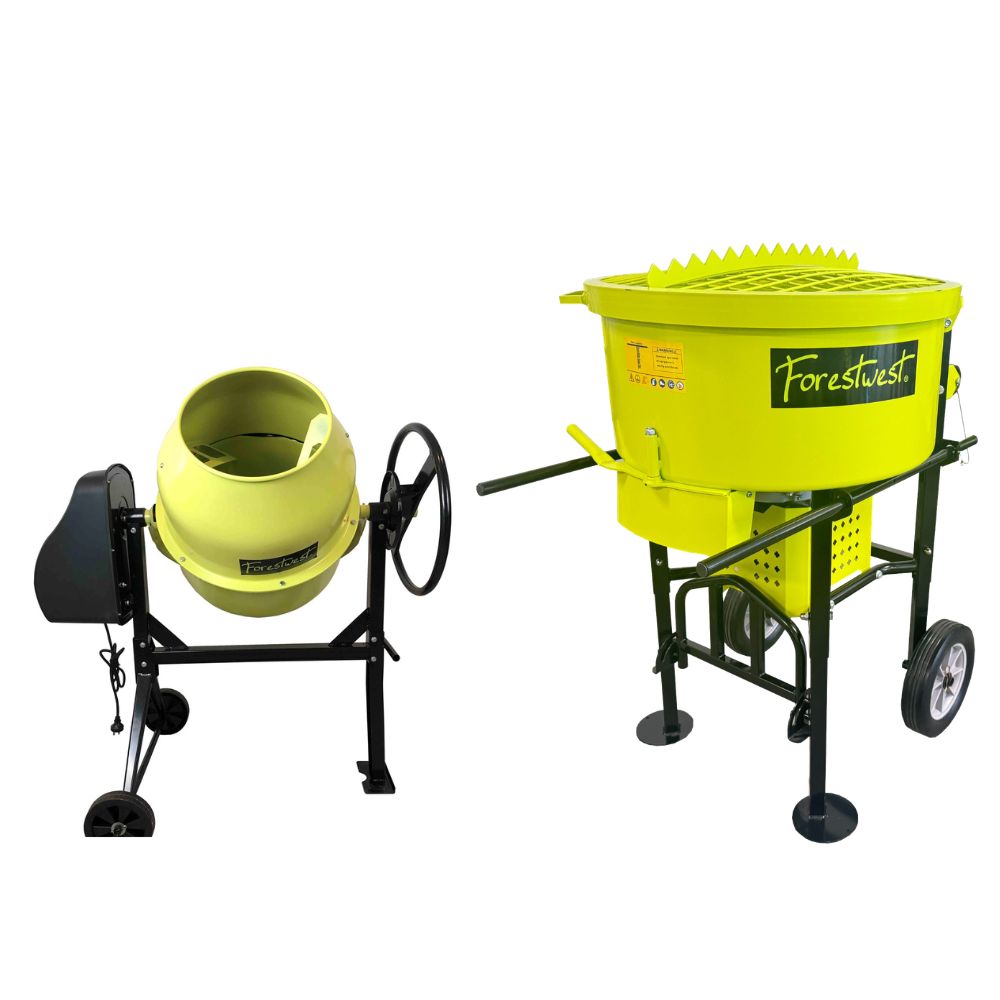
If you look at them side-by-side, the visual difference tells the story.
- The Cement Mixer (Tumbling Action): You know the classic look: a rotating drum with fins or paddles inside. Because the drum is angled, gravity causes the concrete to fall and tumble over itself as it spins. This "tumbling action" is perfect for coating heavy gravel with cement paste. The drum must continue rotating constantly; if you stop it too long, the concrete hardens into a rock-solid mass inside.
- The Mortar Mixer (Shearing Action): This machine usually has a fixed drum (it does not spin). Instead, a vertical or horizontal shaft with paddles or spiral blades rotates inside the drum. These paddles scrape the sides and shear through the thick, sticky material. This action ensures a smooth, consistent texture without lumps, which is vital for mortar that needs to spread easily between bricks.
Application: What Are You Actually Building?
This is where I see beginners get into trouble. They mix concrete in a mortar mixer, or worse, they try to mix sticky mortar in a cement mixer.
When to use a Cement Mixer:
You need a cement mixer when your project requires structural integrity. This includes:
- Foundations and footings
- Floor slabs and driveways
- Sidewalks and heavy-duty paving
The machine is built for high-volume output and durability against abrasion from rocks.

When to use a Mortar Mixer:
You use a mortar mixer for bonding and coating. This includes:
- Bricklaying and blockwork (mixing mortar for the joints)
- Plastering and stucco application
- Tile setting and thin-set mortar
If the final product needs to be smooth and sticky, pick the mortar mixer.

Capacity and Portability
Generally speaking, mortar mixers tend to have a slightly smaller batch capacity (often under 10 cubic feet) compared to cement mixers, which can go much larger . However, both come in portable sizes.
Most small to medium job sites use towable mixers. A key safety note here: if you are towing either machine, never carry material in the drum while towing. Always check your local towing regulations, ensure your hitch is the correct size, and always cross your safety chains under the tongue for maximum support.
Maintenance and Cleaning: The Golden Rule
No matter which machine you use, there is one golden rule: Clean it immediately.
If you let material dry inside these machines, you will be chiseling for hours. Here is how I do it:
For the Cement Mixer:
Because concrete has rocks, it tends to stick and build up.
- Don't wait: Clean it while the concrete is still wet.
- The Gravel Trick: After dumping your load, put a few shovels of gravel and some water back into the drum.
- Let it spin: Run the mixer for a few minutes. The gravel bounces around and knocks the wet cement off the fins and drum walls. Tilt it to different angles to wash all sides.
- Rinse: Drain the gravel and water and give it a final blast with a hose or pressure washer.
For the Mortar Mixer:
Mortar is sticky like glue. It is even more important to clean this immediately because it dries hard and ruins the paddle efficiency.
- Water and Scraping: Fill the drum with water and let the paddles spin. The water alone often breaks up the mortar. You may need to use a scraper or a trowel to help it along while it spins, but be very careful to keep your hands away from the moving paddles.
- Check the Paddles: Worn paddles mean poorly mixed mortar. Inspect them regularly. If you see significant wear (over 50% worn), replace them.
Final Verdict
Choosing the right mixer is simple if you remember this:
- If your mix contains rocks or gravel, choose a rotating drum Cement Mixer.
- If your mix is smooth and sticky (Mortar/Plaster), choose a fixed drum Paddle Mixer.
Investing in the right machine for the material you're mixing ensures a better finish, faster work, and equipment that lasts for decades. Mix smart, and stay safe out there.