
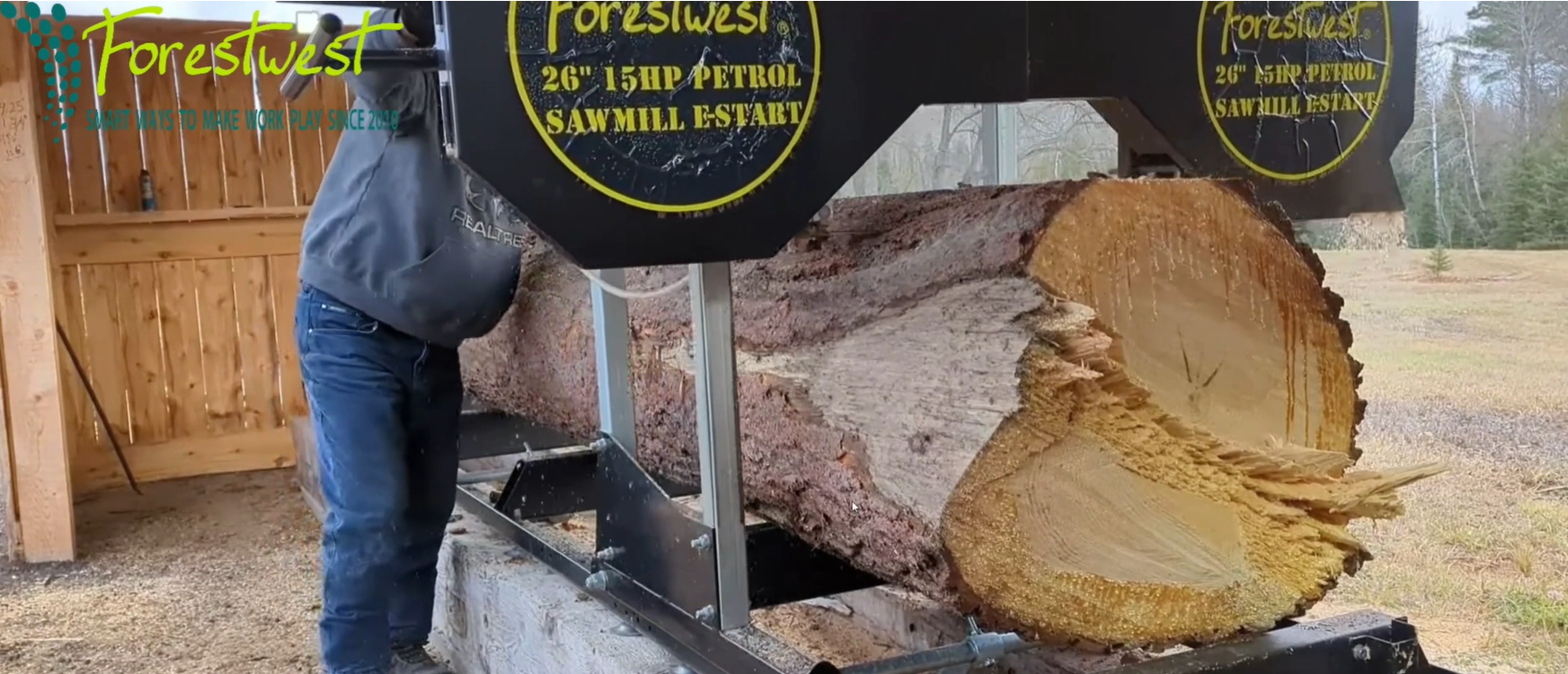
Portable wood sawmills have become increasingly popular across Australia among woodworkers, farmers, rural property owners, and DIY timber users. Instead of purchasing expensive processed timber, a portable sawmill allows users to mill their own logs into usable boards, slabs, beams, and posts.
Whether you are cutting timber for furniture, fencing, decking, or home projects, choosing the right sawmill and maintaining proper cutting performance are essential. One of the most common problems sawmill owners face is the ‘wavy cut’, where the blade drifts during cutting and produces uneven timber surfaces.
This guide explains how to choose the right portable sawmill for your projects and provides practical, real-world solutions to fix wavy cuts effectively.
How to Choose the Right Sawmill for Your Woodworking Projects
1. Choose the Right Cutting Capacity
One of the first things to consider is the maximum log diameter the sawmill can handle. If you mainly cut smaller logs for hobby woodworking, a smaller sawmill may be sufficient. However, if you regularly cut large hardwood slabs or oversized logs, choosing a larger-capacity portable sawmill is extremely important.
Many Australian users prefer larger sawmills because native hardwoods can be wide and heavy. Buying a slightly larger machine also provides more flexibility for future projects.
2. Engine Power Is Important
Engine power directly affects cutting performance. Low-powered sawmills often struggle with dense hardwood, wet timber, or wider cuts. A more powerful engine provides smoother operation, better cutting consistency, and reduced strain on the blade.
For users milling Australian hardwood regularly, reliable engine performance is essential. Consistent power output helps reduce blade wandering and improves overall cutting quality.
3. Portability and Ease of Use
Portable sawmills are ideal for farms, rural properties, and remote locations where moving large logs is difficult. A portable design allows users to bring the sawmill directly to the timber.
When choosing a portable sawmill, consider how easy it is to transport, assemble, and level on uneven ground. A practical and user-friendly design can save significant time during setup.
4. Bed Length and Extension Options
Some users only cut short timber lengths, while others need to process long slabs and beams. A sawmill with bed extension options allows users to expand cutting capacity when required.
Longer rails or availability of extra extension beds also help improve stability during long cuts, especially when milling large hardwood logs.
5. Spare Parts and Blade Availability
Replacement blades and spare parts are often overlooked by first-time buyers. A sawmill becomes difficult to maintain if blades or replacement components are hard to source.
Choosing a sawmill brand with local support and readily available spare parts makes long-term ownership much easier.
For Australian users looking for a reliable and affordable portable sawmill, Forestwest Portable Sawmills are a popular choice among woodworkers, farmers, and rural property owners. Forestwest offers a range of portable bandsaw mills including 22", 26", 32", and 36" models to suit different timber sizes and project requirements. The Forestwest sawmills have been tested with Australian hardwoods such as Red Gum and Ironbark, and feature heavy-duty frame designs, induction hardened steel blades, optional bed extensions, and petrol or electric-powered options. With Australia-wide shipping, local spare parts support, and practical designs suitable for both hobby and commercial use, Forestwest portable sawmills provide an excellent balance between performance, portability, and value.
How to Fix Sawmill Wavy Cuts
A wavy cut is one of the most common issues experienced by portable sawmill owners. This problem usually appears as uneven board thickness, rough slab surfaces, or the blade drifting sideways during cutting.
Many users assume the sawmill frame is faulty, but in reality, wavy cuts are usually caused by blade condition, incorrect setup, excessive feed speed, or poor log support.
1. Replace or Sharpen the Blade First
A dull blade is the number one cause of wavy cuts. As the blade becomes dull, it can no longer clear sawdust efficiently, which causes heat buildup and blade flex during cutting.
Before adjusting the sawmill alignment, always install a freshly sharpened blade and test the cut again. Many operators spend hours adjusting rails when the actual problem is simply a dull blade.
2. Reduce Feed Speed
Pushing the sawmill too fast forces the blade sideways and creates uneven cuts. This is especially common when cutting hardwood or wet timber.
A proper cutting speed should allow the blade to remove timber smoothly without excessive engine strain. If the engine RPM drops heavily during the cut, the feed speed is likely too aggressive.
3. Check Blade Tension Correctly
Incorrect blade tension can cause the blade to wander during cutting. Low tension allows excessive movement, while over-tightening can damage bearings and shorten blade life.
Always follow the sawmill manufacturer’s recommended blade tension settings and recheck tension after the blade warms up.
4. Inspect Blade Guides and Bearings
Blade guides and bearings are critical for maintaining straight blade tracking. Worn bearings or loose guides allow the blade to move sideways during operation.
Check that bearings spin freely and that there is no excessive side movement. Replacing worn guide bearings is often one of the cheapest and most effective solutions for improving cut quality.
5. Secure and Support the Log Properly
Unstable logs create inconsistent pressure during cutting, which can force the blade to wander. Long logs should always be supported evenly along the bed.
Before cutting, ensure the log is clamped securely and that the sawmill rails are level.
6. Clean Sawdust and Resin Build-Up
Sawdust accumulation affects blade tracking and cooling performance. Wet timber can quickly create buildup around wheels and guides.
Regularly clean the rails, blade guides, wheels, and covers to maintain smooth blade movement. Proper lubrication systems can also help reduce resin buildup.
7. Use the Correct Blade for Hardwood
Different timber species require different blade profiles and feed speeds. Australian hardwood is dense and places more strain on the blade compared to softwood.
Using high-quality blades with appropriate tooth profiles improves cutting performance and reduces blade wandering.
8. Check Wheel Alignment
Misaligned wheels can create unstable blade tracking and uneven cuts. Even small alignment issues can cause the blade to drift during long cuts.
Regularly inspect wheel alignment, blade tracking position, and overall sawmill setup to maintain cutting accuracy.
9. Using a small wedge
Final Thoughts
Portable sawmills are a valuable investment for timber milling and woodworking projects. Proper maintenance, correct blade setup, and good cutting technique are the key factors for achieving straight and accurate cuts.
For users looking for reliable portable sawmills in Australia, Forestwest Portable Sawmills provide practical and affordable solutions for hobby users, farmers, and woodworking businesses.